


Philadelphia AC Repair: Troubleshooting a Leaking Basement Unit
Don’t let a leaky AC turn into a major headache (or a flooded basement!). Addressing the issue promptly can save you from more extensive AC repairs and potential mold problems
AC Leaking Water in Basement: Causes and Easy Fixes
There’s nothing quite like the relief of stepping into a cool, air-conditioned home during a sweltering Philadelphia summer. But that relief can quickly turn into dread when you discover a puddle forming under your AC unit in the basement. A leaking AC is a common problem, and while it can be alarming, it’s often something you can address yourself or with the help of a professional.
If you’re a Philadelphia homeowner facing a watery basement due to your AC, take a deep breath! Here’s a breakdown of why it might be happening and what steps you can take.
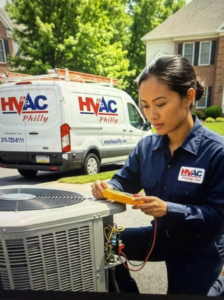
Why is My AC Leaking Water? The Usual Suspects:
Most AC leaks stem from a few common issues related to the condensation process. As your AC cools your home, it removes humidity from the air, which condenses into water. This water is then supposed to drain away. When that drainage is disrupted, you get a leak.
Here are the most frequent culprits:
- Clogged Condensate Drain Line: This is by far the most common reason for AC leaks. Over time, algae, mold, and sludge can build up in the condensate drain line (a PVC pipe that carries the water away), causing a blockage. When the water can’t drain, it backs up and overflows the drain pan.
- Cracked or Rusted Drain Pan: The drain pan collects the condensation. If it’s old, it can rust through or crack, allowing water to escape.
- Disconnected Drain Line: Sometimes, the drain line can become loose or completely disconnected from the unit or the drain system, leading to water spilling out.
- Frozen Evaporator Coil: If your AC unit isn’t getting enough airflow (due to a dirty air filter, blocked vents, or low refrigerant), the evaporator coil can freeze solid. When it melts, it creates an excessive amount of water that the drain system can’t handle, leading to an overflow.
- Dirty Air Filter: A really dirty air filter restricts airflow over the evaporator coil. This can lead to the coil getting too cold and potentially freezing (see point #4).
- Incorrect Installation: Less common, but a poorly installed AC unit might not be properly leveled, preventing water from draining correctly.
- Low Refrigerant: If your AC is low on refrigerant, it can cause the evaporator coil to freeze due to a lack of heat absorption.
What to Do When Your AC is Leaking: A Step-by-Step Guide for Philly Homeowners
Before you call a professional, here are some things you can check and potentially fix yourself:
- Safety First! Turn Off Your AC: Immediately shut off your air conditioner at the thermostat and, if possible, at the circuit breaker for the unit. This prevents further water damage and eliminates any electrical hazards.
- Locate the Leak and Clean Up: Identify where the water is coming from. Use towels, a wet/dry vacuum, or a mop to clean up the standing water to prevent further damage and mold growth.
- Check Your Air Filter: When was the last time you changed your air filter? If it’s dirty and clogged, replace it with a clean one. This simple step can often resolve airflow issues and prevent coil freezing.
- Inspect the Condensate Drain Line:
- Find the PVC Pipe: Look for a PVC pipe coming out of your indoor AC unit (the evaporator coil unit, usually in your basement).
- Look for Blockages: If you can, check for visible clogs at the end of the drain line where it exits your home.
- Attempt to Clear a Clog (Carefully!): You can try to clear a minor clog by gently pouring a cup of distilled vinegar mixed with water (or just distilled water) down the condensate line’s access port (a small cap on the line). Avoid using harsh chemicals like bleach, as they can damage the pan or pipes. Wait 30 minutes, then flush with more water. If you’re uncomfortable doing this, or if the clog is severe, call a professional.
- Examine the Drain Pan: Is it cracked, overflowing, or corroded? If so, it might need to be repaired or replaced.
- Look for a Frozen Coil: If you see ice on the copper lines or the evaporator coil itself, your unit likely has a frozen coil. Keep the AC off until the ice completely melts (this can take several hours). Once melted, try turning the AC back on. If it freezes again, there’s an underlying issue.
While some AC leaks are DIY-friendly, others require the expertise of a professional. It’s time to call a AC repair Philadelphia local company if:
- You’ve tried the troubleshooting steps above and the leak persists.
- You suspect a severe clog you can’t clear.
- You see a cracked or severely rusted drain pan.
- The evaporator coil keeps freezing.
- You hear unusual noises coming from your AC unit.
- You suspect low refrigerant levels (this requires specialized tools and training).
- You’re uncomfortable performing any of the DIY steps.
Don’t let a leaky AC turn into a major headache (or a flooded basement!). Addressing the issue promptly can save you from more extensive AC repairs and potential mold problems down the line. Keep your Philadelphia home cool and dry by understanding your AC and knowing when to call for help!