Philadelphia summers can be brutal, and when a heat wave hits, your AC system becomes your best friend. Learn how to keep your home cool, your energy bills manageable, and your AC running at peak performance all season long. These practical tips are designed specifically for Philadelphia homeowners facing the city's intense summer heat.
Philadelphia summers are no joke. When a heat wave rolls in — and in Philly, it’s not a matter of if but when — temperatures can soar into the upper 90s and beyond, with humidity that makes it feel even hotter. Your air conditioning system is your first line of defense, but running it effectively takes more than just cranking it down to 65°F and hoping for the best. Here’s everything you need to know to stay cool, save energy, and keep your AC running strong all summer long.
Set Your Thermostat the Right Way
During a heat wave, it’s tempting to drop your thermostat as low as it will go — but that’s actually counterproductive. The U.S. Department of Energy recommends setting your thermostat to 78°F when you’re home and active. This keeps you comfortable without overworking your system.
Avoid drastic temperature drops. If you’ve been away and the house has heated up to 90°F, don’t set the thermostat to 68°F expecting rapid relief. Your AC will run continuously without ever reaching that target, burning energy and stressing the equipment. Instead, set it to 78°F and let the system work steadily. A consistent, moderate setting is always more efficient than extreme swings.
Use Fans to Boost AC Efficiency
Ceiling fans and portable fans are your AC’s best allies. Fans don’t actually cool the air — they create a wind-chill effect that makes you feel cooler, which means you can raise your thermostat by a few degrees without sacrificing comfort.
Make sure your ceiling fans are spinning counterclockwise in summer (when viewed from below) to push cool air downward. Use box fans in windows during cooler evening hours to draw in fresh air and give your AC a break. Combining fans with your AC can reduce your cooling costs by up to 15%.
Seal Gaps Around Windows and Doors
All the cool air your AC produces is worthless if it’s leaking outside. Check your windows and doors for gaps, cracks, and worn weatherstripping — these are common culprits in Philadelphia’s older rowhouses and twin homes.
Use weatherstripping around door frames and caulk to seal gaps around window frames. Even small gaps can let in significant amounts of hot, humid air. Don’t forget to check the seals around window AC units as well — a poorly fitted unit can leak cool air and let in warm air simultaneously. A quick inspection and a few dollars in materials can make a noticeable difference in your home’s comfort and efficiency.
Schedule Preventive AC Maintenance
The worst time to discover your AC has a problem is during a heat wave. Ideally, you should schedule a professional AC tune-up every spring, before the summer heat arrives. A certified HVAC technician will inspect refrigerant levels, clean coils, check electrical connections, and ensure your system is ready to handle peak demand.
If you missed the spring window, don’t wait — schedule maintenance as soon as possible. Many Philadelphia HVAC companies offer summer tune-up specials. Regular maintenance not only prevents breakdowns but also extends the life of your system and keeps it running at peak efficiency, saving you money on energy bills over time.
Change Your Air Filters Regularly
A dirty air filter is one of the most common — and most preventable — causes of poor AC performance. When the filter is clogged with dust, pet hair, and debris, your system has to work much harder to pull air through, reducing airflow and efficiency.
During a heat wave, when your AC is running almost constantly, check your filter every 2–4 weeks. Standard 1-inch filters should be replaced monthly during heavy use. If you have pets or allergies, consider upgrading to a higher-MERV-rated filter, but make sure your system can handle the increased resistance. A clean filter is one of the simplest and cheapest ways to keep your AC running efficiently.
Use a Programmable or Smart Thermostat
If you’re still using a manual thermostat, upgrading to a programmable or smart thermostat is one of the best investments you can make for summer comfort and energy savings. These devices let you set cooling schedules that match your lifestyle.
For example, you can program the thermostat to ease up on cooling while you’re at work (say, 82°F) and start cooling down the house 30 minutes before you return home. Smart thermostats like the Nest or Ecobee go even further — they learn your habits, adjust automatically, and can be controlled remotely from your phone. During a heat wave, you can check in and adjust settings on the fly, ensuring you never come home to a sweltering house.
Close Blinds and Curtains During the Day
Sunlight streaming through your windows is essentially a free space heater — and during a Philadelphia heat wave, that’s the last thing you need. Solar heat gain through windows can significantly raise indoor temperatures and force your AC to work overtime.
Close blinds, curtains, or shades on south- and west-facing windows during the hottest parts of the day (roughly 10 a.m. to 4 p.m.). Blackout curtains or cellular shades offer the best insulation. Reflective window film is another great option for Philadelphia homes that get a lot of direct sun. This simple habit can reduce indoor temperatures by several degrees and noticeably lighten the load on your AC.
Avoid Heat-Generating Appliances During Peak Hours
Your oven, clothes dryer, and even your dishwasher generate significant amounts of heat when they run. During a heat wave, using these appliances in the afternoon — when outdoor temperatures are at their peak — adds unnecessary heat to your home and forces your AC to compensate.
Shift heat-generating tasks to early morning or evening hours when it’s cooler. Grill outside instead of using the oven. Run the dishwasher and dryer after 8 p.m. Swap out incandescent bulbs for LEDs, which produce far less heat. These small behavioral changes add up quickly, reducing the burden on your AC and keeping your home more comfortable throughout the day.
Know When to Call an HVAC Professional
Even a well-maintained AC system can struggle during an extended heat wave. Knowing the warning signs of a failing system can save you from a full breakdown on the hottest day of the year.
Call an HVAC professional if you notice:
- Warm or lukewarm air blowing from your vents
- Unusual noises — grinding, squealing, or banging
- Ice forming on the refrigerant lines or indoor unit
- A sudden spike in your energy bill without a change in usage
- Frequent cycling on and off (short cycling)
- Refrigerant leaks or a sweet chemical smell near the unit
- The system won’t turn on at all
Don’t wait and hope the problem resolves itself. In Philadelphia’s summer heat, a malfunctioning AC can become a health emergency, especially for elderly residents, young children, and pets. Most reputable HVAC companies offer emergency service — keep a trusted technician’s number handy before the heat wave season begins.
Stay Cool All Summer Long
Surviving a Philadelphia heat wave is all about preparation, smart habits, and knowing your equipment. By setting your thermostat wisely, using fans strategically, sealing air leaks, keeping up with maintenance, and making a few simple lifestyle adjustments, you can stay comfortable even when the mercury climbs into triple digits. And if your AC ever shows signs of trouble, don’t hesitate to call a professional — your comfort and safety are worth it. Stay cool, Philly!
Need help from a Philly HVAC pro?
Same-day service for heating, cooling, and indoor air quality.
Related articles
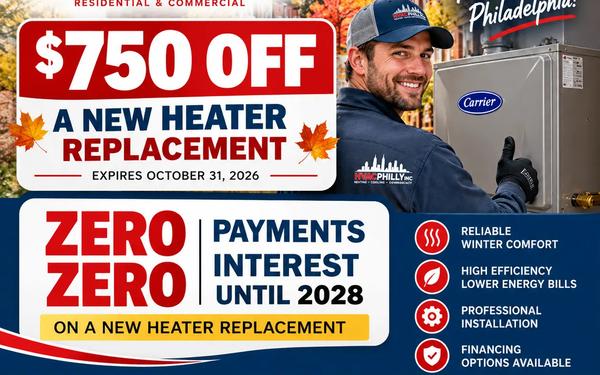
$750 Off Heater Replacement in Philadelphia | HVAC Philly
How to Choose a Heating Repair Company in Philadelphia